Cleaning guide
How to Clean a Persian or Oriental Rug in Las Cruces
By Judaah Chandler7 min read
In this article
How is a Persian or Oriental rug different from wall-to-wall carpet?
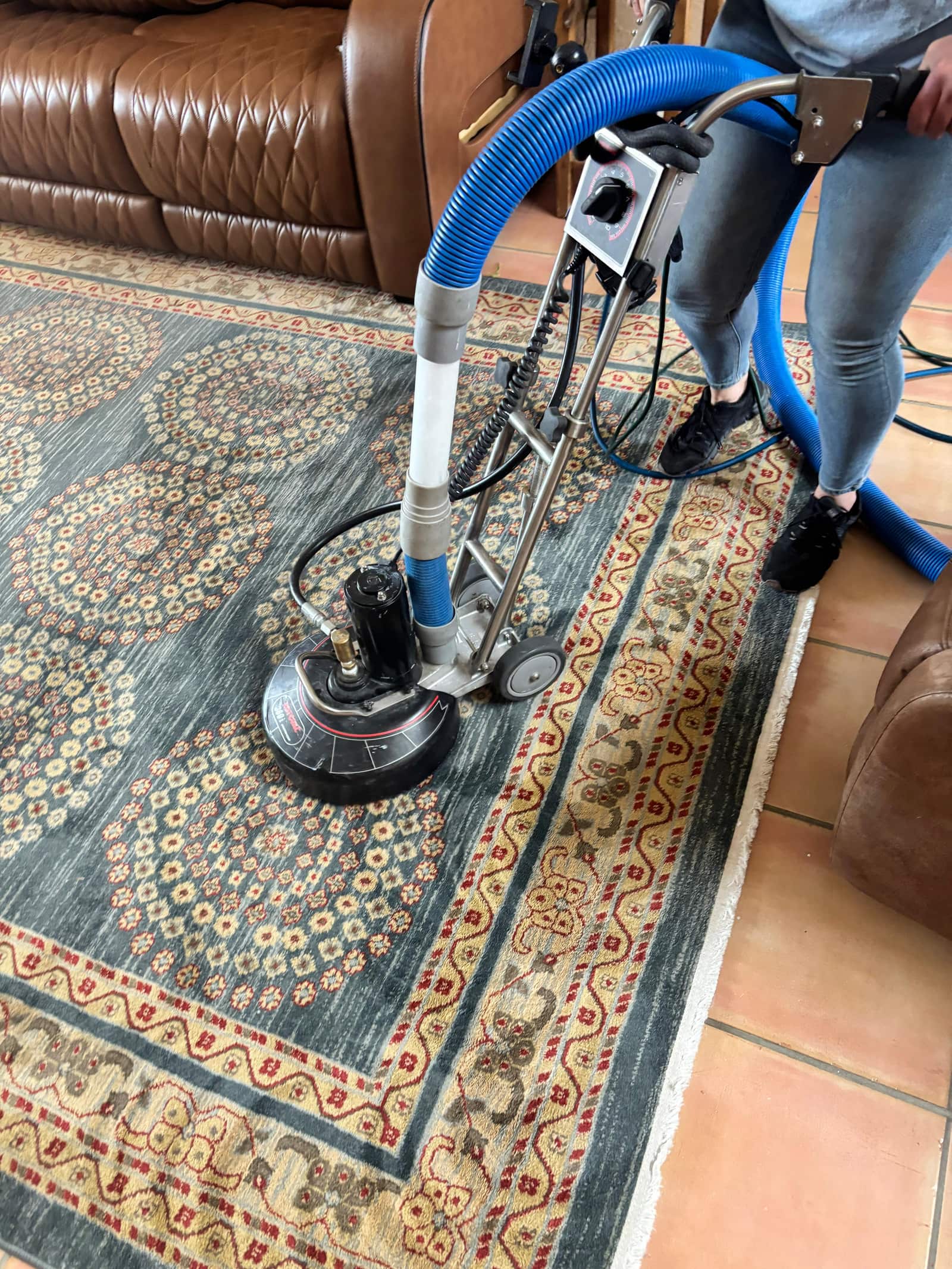
A Persian or Oriental rug is built in a fundamentally different way than the wall-to-wall carpet in most homes. Wall-to-wall carpet is usually machine-made from synthetic fiber like nylon or polyester, stretched over padding, and designed to handle hot water extraction. A traditional Persian or Oriental rug is often hand-knotted from wool or silk, with each knot tied to a cotton or wool foundation, and colored with dyes that range from modern and stable to natural and reactive. That construction means a method built for synthetic carpet can be too aggressive for a hand-knotted rug. Heat, high pH cleaners, and hard mechanical agitation that suit a traffic lane can stress natural fibers and loosen dyes. The rug needs handling matched to what it is made of, not a standard carpet cleaning pass.
Why can the dyes in a hand-knotted rug bleed during cleaning?
Dye bleed is the main risk that separates rug cleaning from carpet cleaning. Many older or traditional rugs use natural dyes made from plants, roots, and insects, and some use early synthetic dyes that were not fully colorfast. When these dyes get wet, especially with warm water or an alkaline cleaner, color can release from the fiber and migrate into lighter areas of the rug. A deep red can run into a cream border and leave a stain that is hard to reverse. This is why a careful cleaner tests dye stability first by dampening a small hidden area and checking whether color transfers to a white cloth. Water temperature, pH, and dwell time all affect how dyes behave. A rug that passes the test can be cleaned with more confidence. A rug that shows transfer needs a gentler approach or a specialist.
How does cleaning wool differ from cleaning silk?
Wool and silk are both natural fibers, but they behave differently and call for different handling. Wool is durable and naturally resists soil, which is part of why so many quality rugs are made from it. It is also sensitive to high pH, so strongly alkaline cleaners can damage the fiber and dull the color over time. Wool holds a great deal of water as well, so it needs thorough drying to avoid odor and browning. Silk is far more delicate. It is finer, weaker when wet, and prone to losing its sheen or developing texture change if it is scrubbed or over-wetted. Silk rugs, and the silk highlights woven into some wool rugs, need a gentle, low-moisture approach rather than the saturation that wool can tolerate. Identifying which fiber is present is the first step, because the safe method depends entirely on it.
How should the fringe be handled on a Persian or Oriental rug?
The fringe on a hand-knotted rug is not a decorative trim added at the end. It is the exposed end of the warp, the foundation threads that the entire rug is knotted onto. That distinction matters during cleaning. Because the fringe is structural, harsh brushing, strong chemicals, or aggressive agitation can fray, break, or gray the threads, and damage there is not a simple cosmetic fix. Fringe also tends to hold soil and trap discoloration because it sits at the edges where feet and dust reach it. Careful cleaning works the fringe gently, by hand where needed, rather than running a machine head over it. Knowing that the fringe is part of the rug foundation is one of the details that separates rug-aware cleaning from treating the piece like a carpet remnant.
What does Aggie check before cleaning a Persian or Oriental rug in Las Cruces?
Aggie reviews the rug before any cleaning to set honest expectations. The first checks are fiber type, whether wool, silk, or a synthetic blend, and dye stability, tested on a small hidden area to see whether color moves. Age and construction matter next, because a hand-knotted antique behaves differently than a newer machine-made piece. Existing damage, prior repairs, weak foundation areas, moth activity, and old stains that were treated before all change what cleaning can reasonably achieve. From there, Aggie can explain what to expect rather than promising a specific result. Rug cleaning in Las Cruces covers area rugs, entry rugs, and Persian or Oriental rugs, and the method is matched to what the review finds. Aggie does not operate a dedicated rug wash plant, so pieces that need full-immersion wash handling are identified up front and referred when that is the better path.
When does a Persian or Oriental rug need extra caution or a specialist?
Some rugs call for extra caution, and naming those situations is part of doing the job right. Antique and high-value rugs, fine silk pieces, rugs with dyes that transfer during testing, and heirlooms with appraised or sentimental value all carry more risk under a standard approach. The same is true for rugs with structural problems like dry rot in the foundation, open tears, or active moth damage, where cleaning can make existing weakness worse. In these cases the responsible step is to slow down, test carefully, and recommend a specialized rug restoration or hand-wash facility when that is what the piece truly needs. Aggie would rather refer a delicate antique to the right resource than risk damage on a piece that cannot be replaced. For everyday wool area rugs in good condition, careful on-site cleaning is usually a reasonable fit.
Related services
Related cleaning services
Cleaning a Persian or Oriental rug well depends on matching the method to the fiber and dyes rather than treating it like carpet. Aggie Carpet and Tile Cleaning provides rug cleaning and carpet cleaning in Las Cruces for homes, rentals, and businesses.
Questions
Common questions about this topic
Can a Persian or Oriental rug be steam cleaned like carpet?
It depends on the rug. Some durable, colorfast wool rugs tolerate a controlled low-moisture cleaning, but the hot water extraction method built for synthetic wall-to-wall carpet can be too aggressive for a hand-knotted rug with natural dyes. Heat and saturation can set dye bleed and stress the foundation. The safe path is to identify the fiber, test the dyes, and match the method to the rug rather than assuming a carpet process will transfer.
How can I tell if my rug is wool or silk?
A few simple checks give clues, though they are not definitive. Wool feels slightly coarse and springs back when compressed, while silk feels smooth, cool, and has a distinct sheen that shifts as the light moves. Silk is also much finer, so silk rugs usually have a high knot count and feel thin. A burn test on a single fiber is sometimes used, but it risks damage and is a job for a professional. When in doubt, Aggie can identify the fiber during the in-person review before any cleaning.
Do natural dye rugs always bleed when they get wet?
No. Many natural dye rugs are well made and colorfast, and they clean without any color transfer. Others, particularly older pieces or rugs with certain reds and deep blues, can release dye when they get wet, especially with warm water or an alkaline cleaner. There is no way to know for certain without testing a small hidden area first. That dye-stability test is exactly why a rug should not be treated like carpet and run through a standard wet pass without a check.
How often should a Persian or Oriental rug be professionally cleaned in Las Cruces?
For most homes, a professional cleaning every one to three years is a reasonable range, depending on traffic, pets, and how much fine desert dust the rug collects. Las Cruces wind season drives grit deep into rug pile, which acts as a slow abrasive on the fibers over time. Between cleanings, regular rug care habits like gentle vacuuming and rotation help the rug hold up. A rug in an entry or a pet household may need attention more often than a low-traffic piece.
Does Aggie clean antique or high-value Oriental rugs?
Aggie reviews each rug individually and is honest about what is a good fit. Everyday wool area rugs in sound condition are a routine job. For antique, fine silk, or high-value pieces, or rugs with unstable dyes or a fragile foundation, Aggie tests carefully and will recommend a specialized rug restoration or hand-wash facility when that is the safer path. The goal is to protect the rug, not to take on a piece that needs handling beyond what on-site cleaning can safely provide.
Keep reading
Related articles
More cleaning guides connected to this topic.
How to Keep Rugs Cleaner Between Professional Cleanings
Simple care habits for area rugs, entry rugs, and high-use home rugs.
Read the guideHow Much Does Carpet Cleaning Cost in Las Cruces?
A straight look at what carpet cleaning costs in Las Cruces and what changes the price.
Read the guideCan Carpet Be Saved After a Flood?
When flooded carpet can be saved, when the pad has to go, and what Aggie checks before deciding in Las Cruces homes and businesses.
Read the guide