
Cleaning guide
Why Does Grout Turn Dark Even After Mopping?
By Judaah Chandler6 min read
In this article
What makes grout hold soil differently than tile?
Grout is the fill material between tile pieces, and it has a fundamentally different surface structure than the glazed tile it surrounds. Most ceramic and porcelain tile has a sealed, non-porous surface that resists water and soil absorption. Grout is porous by nature, which means liquids and fine particulate can enter the material rather than sitting on top of it. This structural difference is why dark grout lines develop even on floors that otherwise look clean. The tile surface sheds most of what lands on it. The grout between the tiles absorbs what reaches it.
Why does mopping make dark grout worse over time?
Mopping is effective at moving soil across a tile surface, but the mechanics of a wet mop on grout lines work against the goal of cleaning them. When a mop runs across tile, dirty water is pushed in all directions, and some of it settles into the recessed grout channels that sit slightly lower than the tile face. Cleaning products that leave residue add another layer to what accumulates there. Over dozens of mop sessions, grout lines collect a mixture of soil, product residue, and mineral deposits from the water itself. Each session adds slightly more to what was already there. This is why floors that are mopped regularly can still show progressively darker grout lines year after year. The same surface-versus-deep gap is why a carpet rental machine falls short of professional extraction, lifting soil it cannot fully remove.
What is the difference between sealed and unsealed grout when it comes to darkening?
Unsealed grout acts like a sponge for anything that reaches it. Water, cooking oil, soap film, and foot traffic soil all absorb into the porous surface over time. Sealed grout has a protective layer that slows this absorption. The seal does not make grout immune to darkening, but it changes how quickly buildup can penetrate the surface. A floor that has never been sealed tends to darken faster than one that was sealed after installation and maintained. Once significant buildup has already worked into the grout, sealing over the top of it will not remove what is already there. Cleaning first and then reviewing whether sealing makes sense for that floor is the practical order of operations.
Can dark grout be cleaned back to its original color?
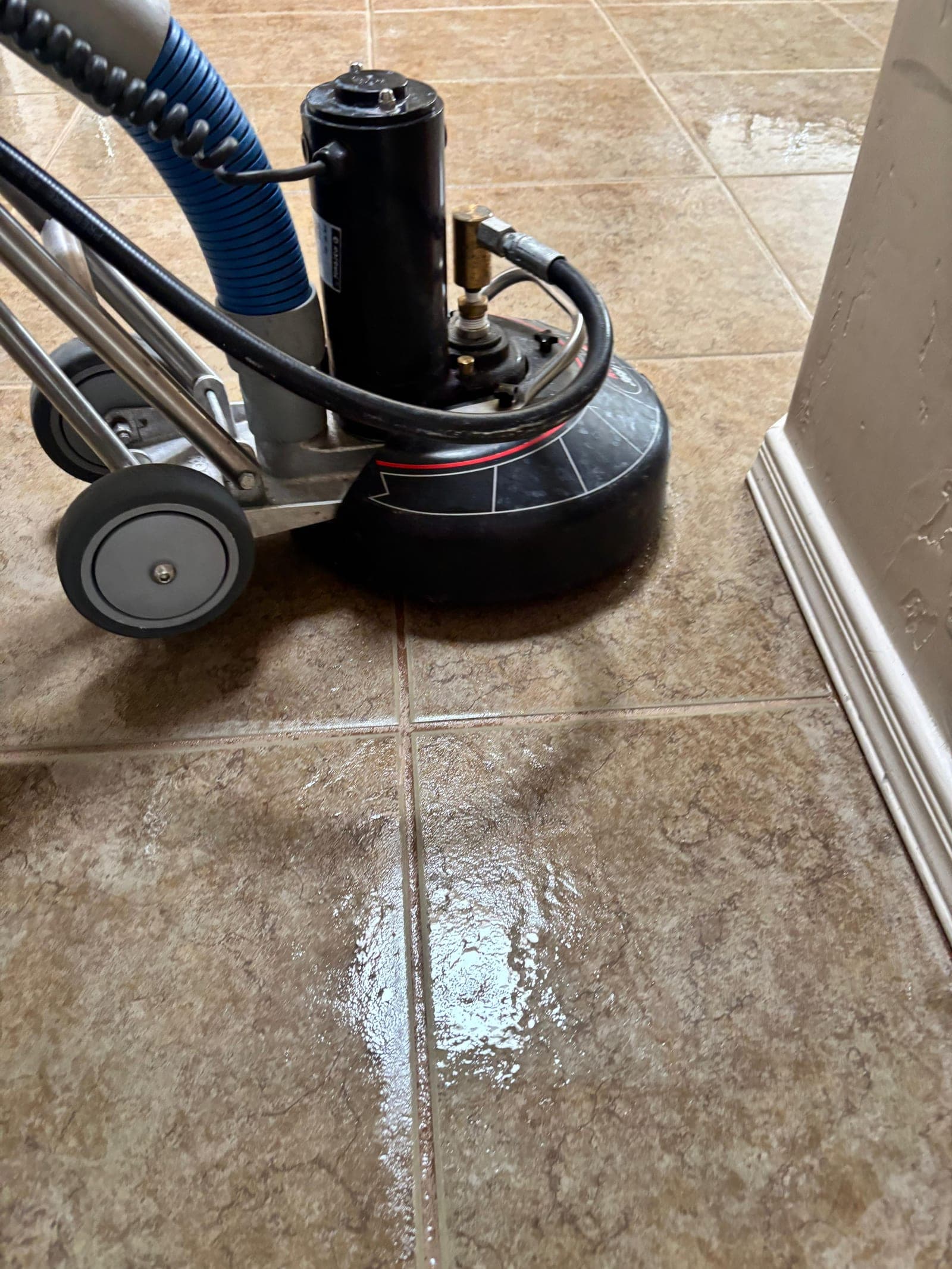
In most cases, grout that has darkened from soil and residue buildup can be cleaned back to a noticeably lighter appearance. The result depends on what caused the darkening and how deeply the buildup has penetrated the grout. Surface buildup from mopping residue and foot traffic typically responds well to professional cleaning. Grout that has been stained by a permanent colorant, certain oils, or mineral deposits that have fully set inside the material may respond differently. Professional tile and grout cleaning addresses buildup that mopping cannot reach and can reveal the original grout color in many situations. Results vary based on grout age, condition, and what the floor has been exposed to over time.
How does hard water in Las Cruces affect grout lines?
Las Cruces has hard water, meaning the water supply carries a higher concentration of dissolved minerals, primarily calcium and magnesium. When water evaporates from tile and grout surfaces, the minerals it carried are left behind. On tile, this often shows as a hazy or white mineral film on the surface. In grout lines, these same minerals accumulate inside the porous material over time. On floors that are regularly mopped, each session deposits a small amount of mineral residue into the grout. Multiplied across months and years of regular cleaning, this mineral buildup contributes to darkening that behaves differently from ordinary soil and that responds differently to cleaning as well.
When does grout sealing make sense after professional cleaning?
After professional tile and grout cleaning, grout that is in good structural condition is a reasonable candidate for sealing if recurring darkening has been a consistent problem. A sealant creates a barrier that slows the absorption of new soil and moisture into the porous surface. The practical benefit is maintenance rather than permanent protection. A sealed floor still needs regular cleaning, and the sealant wears over time and needs to be reapplied. Aggie can review grout condition after cleaning and discuss whether sealing makes sense for a specific floor. It is not assumed as part of every tile cleaning job, and the condition of the grout and how the floor is used determines whether it is appropriate.
Related services
Related cleaning services
Understanding why grout darkens is directly connected to what professional tile and grout cleaning addresses that regular mopping cannot. Aggie Carpet and Tile Cleaning provides tile and grout cleaning and carpet cleaning in Las Cruces for homes and businesses.
Questions
Common questions about this topic
Does the type of grout affect how quickly it darkens?
Yes. Unsanded grout used in narrow joints and sanded grout used in wider joints have different porosity levels that affect how readily they absorb soil and moisture. Epoxy grout is the least porous and darkens least over time, but it is used in specific installation contexts and is not standard in most residential floor tile. The grout type, the joint width, and whether the grout was sealed after installation all influence how fast darkening develops.
Why do grout lines in bathrooms and kitchens darken faster than in other rooms?
Bathrooms and kitchens combine moisture, steam, cooking residue, soap film, and frequent cleaning, all of which are absorbed by porous grout more consistently than in other rooms. Steam from showers settles into grout lines and carries soap and mineral residue with it. Kitchen grout near cooking areas picks up grease and food particles that mop cleaning can spread rather than remove. The combination of frequent moisture and higher residue load accelerates darkening in these rooms compared to hallways or living areas.
Can the type of mop or cleaning solution affect how dark grout lines become over time?
Yes. String mops push dirty water into grout channels more than flat microfiber mops, which trap more soil in the mop head rather than redistributing it across the floor. Cleaning products that leave a residue, including some all-purpose cleaners and soap-based solutions, coat the grout surface and attract additional soil. Products that are not fully rinsed away add a layer that darkens with each cleaning. The mop type and product choice both affect how quickly grout lines accumulate buildup.
Does Las Cruces hard water contribute to grout darkening differently than regular soil?
Yes. Las Cruces hard water deposits calcium and magnesium on surfaces when water evaporates. In grout lines, these mineral deposits build up inside the porous material over time and can harden. This mineral layer can make grout lines appear darker than the soil buildup alone would explain and responds differently to cleaning than ordinary soil accumulation does. Floors cleaned with hard water without periodic professional treatment tend to show combined soil and mineral darkening.
How can you tell whether dark grout is buildup or just a darker original color?
The original grout color is usually visible in a protected area such as under a toilet base, behind a fixed appliance, or inside a cabinet where cleaning tools have not reached. Comparing that area to the open floor gives a reasonable indication of how much the visible grout color has changed from buildup versus the original installation color. If the protected area is much lighter than the open floor, the darkening is likely buildup that professional cleaning can address. If both areas look similar, the original grout may simply be a darker color.
Keep reading
Related articles
More cleaning guides connected to this topic.
Should You Seal Grout After Cleaning?
A practical guide to whether sealing grout after a deep clean is worth it for Las Cruces homes and rentals.
Read the guideHow Much Does Carpet Cleaning Cost in Las Cruces?
A straight look at what carpet cleaning costs in Las Cruces and what changes the price.
Read the guideCan Carpet Be Saved After a Flood?
When flooded carpet can be saved, when the pad has to go, and what Aggie checks before deciding in Las Cruces homes and businesses.
Read the guide