Cleaning guide
Should You Seal Grout After Cleaning?
By Judaah Chandler6 min read
In this article
What does sealing grout actually do?
Grout is porous by nature, which means liquids and fine soil can soak down into it rather than resting on top. A grout sealer adds a thin protective layer that slows that absorption. It does not turn grout into glass, but it changes how the surface behaves. Spills sit on top a little longer before soaking in, which gives you more time to wipe them up. Day to day soil works into the lines more slowly, so the floor stays looking cleaner between deep cleanings. For Las Cruces homes, where hard water minerals and fine desert dust push into open grout quickly, that slower absorption can make routine mopping more effective. Sealing is about buying time and making maintenance easier, not about a permanent shield.
Do you have to clean grout before sealing it?
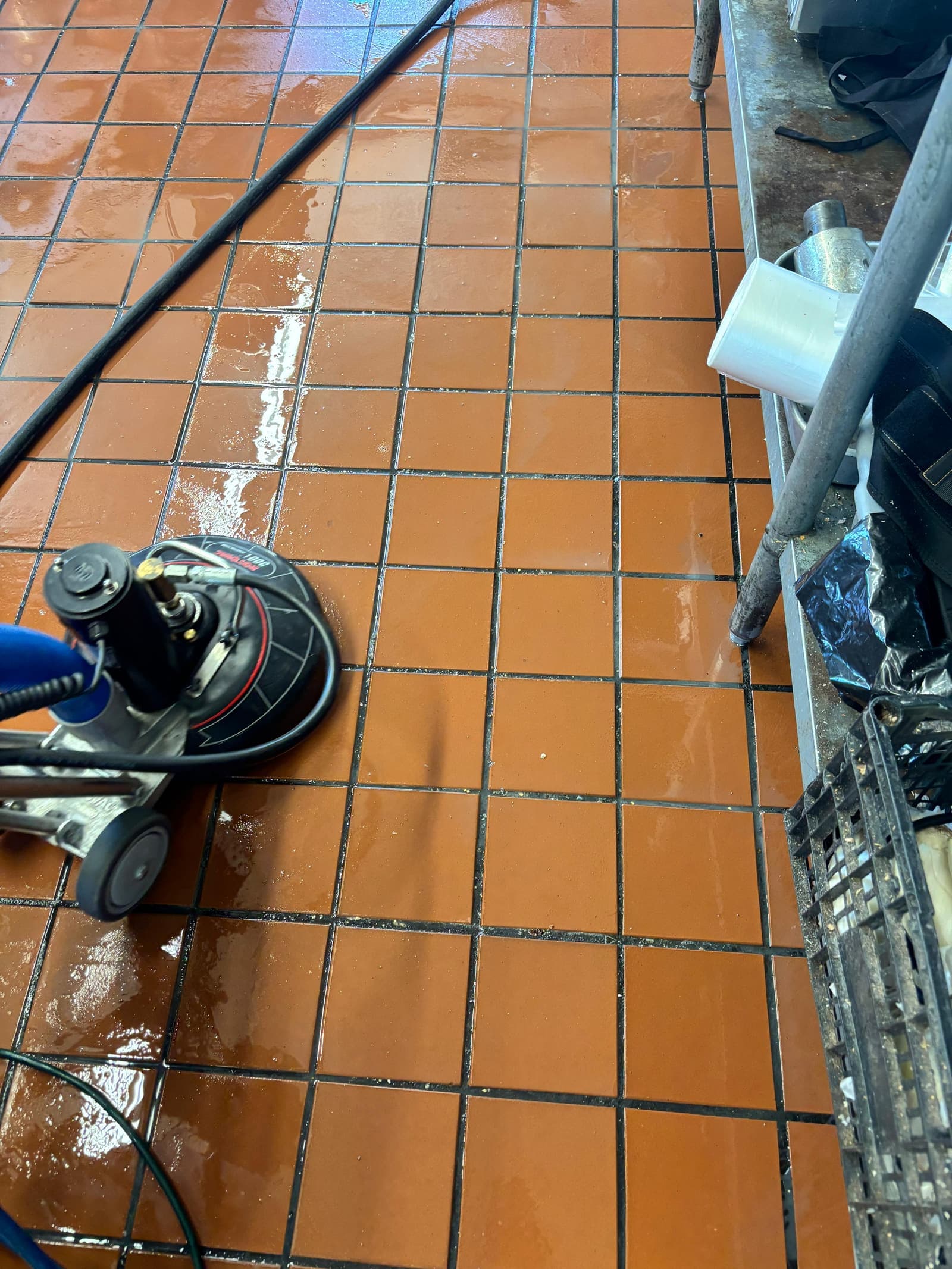
Yes, and this is the part people get backward most often. Sealing over dirty grout locks the soil in. The sealer bonds to whatever is on the surface at the time, so if the lines are still holding old soil, residue, and mineral buildup, you are sealing that darkness in place rather than protecting clean grout. The right order is to deep clean first, let the grout dry fully, then seal. If you are dealing with grout that already looks dark, start by understanding why grout turns dark even after mopping before you reach for a sealer. A proper professional tile and grout cleaning reaches buildup that mopping cannot, which is exactly why sealing afterward gives a better result.
When does sealing grout make sense?
Sealing makes the most sense right after a deep clean, when the grout is at its cleanest and fully dry. It is especially worth considering on grout that has never been sealed or where an old sealer has worn off. High-use areas benefit most, including kitchens, entryways, and bathrooms where spills, moisture, and foot traffic hit the floor constantly. Rentals and commercial floors are strong candidates too. A rental unit between tenants or an office that takes heavy daily traffic can stay presentable longer when the grout resists soil instead of absorbing it. Property managers in Las Cruces often pair a turnover cleaning with sealing for that reason. If your grout already stays clean with little effort, sealing may matter less, so it is worth reviewing the floor first.
What is the difference between sealed and unsealed grout?
Unsealed grout acts like a sponge. Water, cooking oil, soap film, and tracked-in soil all soak straight into the porous surface, which is why open grout darkens faster and is harder to wipe clean. Sealed grout resists that absorption for a while. Spills bead up or sit on the surface longer instead of disappearing into the line, so you can wipe them away before they set. The practical difference shows up in how the floor maintains itself between deep cleanings. In Las Cruces, where hard water leaves mineral residue and desert dust settles into open grout, an unsealed floor tends to show darkening sooner. A sealed floor still gets dirty, but it gives you a head start on keeping it clean. The same idea applies whether the tile is in a home, an apartment, or a busy storefront.
How can you tell if your grout is already sealed?
There is a simple test you can do in under a minute. Pour or drip a small amount of water directly onto a grout line and watch what happens. If the water beads up or sits on top of the grout for a couple of minutes, the grout is sealed and the sealer is still doing its job. If the water soaks in and the grout darkens where it landed, the grout is either unsealed or the sealer has worn off and is due to be redone. Try this in a few spots, because a floor can wear unevenly. Entryways and the area in front of a sink often lose their seal first since they take the most traffic and moisture. This quick check tells you whether resealing is worth scheduling or whether your current seal still has life left.
How long does grout sealer last?
Grout sealer does not last forever, and how long it holds up depends on the floor. As a general range, a good sealer often lasts somewhere between one and three years before it needs to be redone, though that varies with traffic, the product used, and how the floor is maintained. A low-traffic guest bathroom may hold its seal much longer than a busy kitchen or a commercial entryway that gets mopped daily. Harsh cleaners and constant moisture wear a seal down faster. When the seal fades, you do not start over with new grout. The grout gets cleaned again, dried, and resealed. The water-drop test is the easiest way to know when that time has come, so you are not guessing based on the calendar alone.
Related services
Related cleaning services
Sealing belongs right after a deep clean, when the grout is at its cleanest. Aggie Carpet and Tile Cleaning provides tile and grout cleaning and grout sealing in Las Cruces for homes, rentals, and businesses.
Questions
Common questions about this topic
Does sealing grout make it stain-proof?
No. Sealing slows how fast spills and soil soak in, but it does not make grout stain-proof. A sealer buys you more time to wipe up a spill before it sets, which is its real value. You should still clean up spills promptly, since anything left sitting long enough can still work into the grout.
Can you seal grout that already looks dark?
You can, but you should not until it has been deep cleaned first. Sealing over dark, dirty grout locks the existing soil and buildup in place rather than protecting clean grout. The right order is to clean the grout thoroughly, let it dry fully, and then seal. Otherwise you are sealing in the very darkness you wanted to remove.
Does Aggie Carpet and Tile Cleaning seal grout?
Yes. Aggie offers grout sealing in Las Cruces, usually as a step after a deep tile and grout cleaning when the grout is in good condition. Sealing is reviewed based on the floor rather than assumed for every job, since the grout condition and how the floor is used determine whether it makes sense.
How often should grout be resealed?
It depends on the floor and how much use it gets, but resealing roughly every one to three years is a reasonable general range. High-traffic areas like kitchens and entryways tend to need it sooner than low-use rooms. The water-drop test is the most reliable way to check, since the seal wears unevenly and the calendar alone can be misleading.
Will sealing grout in Las Cruces help with hard water buildup?
It can help. Sealed grout resists absorption for a while, so the minerals in Las Cruces hard water and the fine desert dust have a harder time settling deep into the lines. Sealing does not stop mineral buildup entirely, but it can slow how quickly grout darkens and make routine cleaning more effective between deep treatments.
Should rental and commercial floors be sealed after cleaning?
Often yes. Rentals between tenants and commercial floors that take heavy daily traffic benefit from grout that resists soil instead of absorbing it, since it stays presentable longer. Many property managers in Las Cruces pair a turnover or deep cleaning with sealing for that reason. The floor condition still determines whether sealing is appropriate.
Keep reading
Related articles
More cleaning guides connected to this topic.