Aggie Carpet and Tile Cleaning repairs damaged tile and grout across Las Cruces, NM. That covers regrouting, grout replacement, re-caulking, cracked and loose tile replacement, and grout color sealing. Repair is different work than cleaning. Cleaning takes soil out of a joint that is still solid, and repair rebuilds a joint that has cracked, crumbled, or disappeared. Aggie can look at the damage before setting expectations, because the right fix depends on what caused it.
5-Star Rated on GoogleLocal carpet, tile, rug, and furniture cleaning
2025 Neighborhood FaveRecognized by Nextdoor neighbors
LCServing Las CrucesHome base in Las Cruces, also serving nearby El Paso
Quick answer
What does professional tile and grout repair do?
Tile and grout repair rebuilds damaged joints and replaces damaged tile. Cleaning removes soil from a joint that is still sound, while repair deals with a joint that has cracked, crumbled, or washed out. Aggie Carpet and Tile Cleaning covers regrouting, grout replacement, re-caulking, cracked and loose tile replacement, and grout color sealing across Las Cruces, NM, for homes, apartments, rentals, offices, restrooms, and high-traffic commercial floors. Cracked grout, loose tile, and failed caulk each point to a different cause, so the cause gets identified before the repair method is chosen. The quote depends on the condition of the joints, the size of the damaged area, the joint width, the tile type, and access.
Real Aggie work
What regrouting a Las Cruces tile floor involves
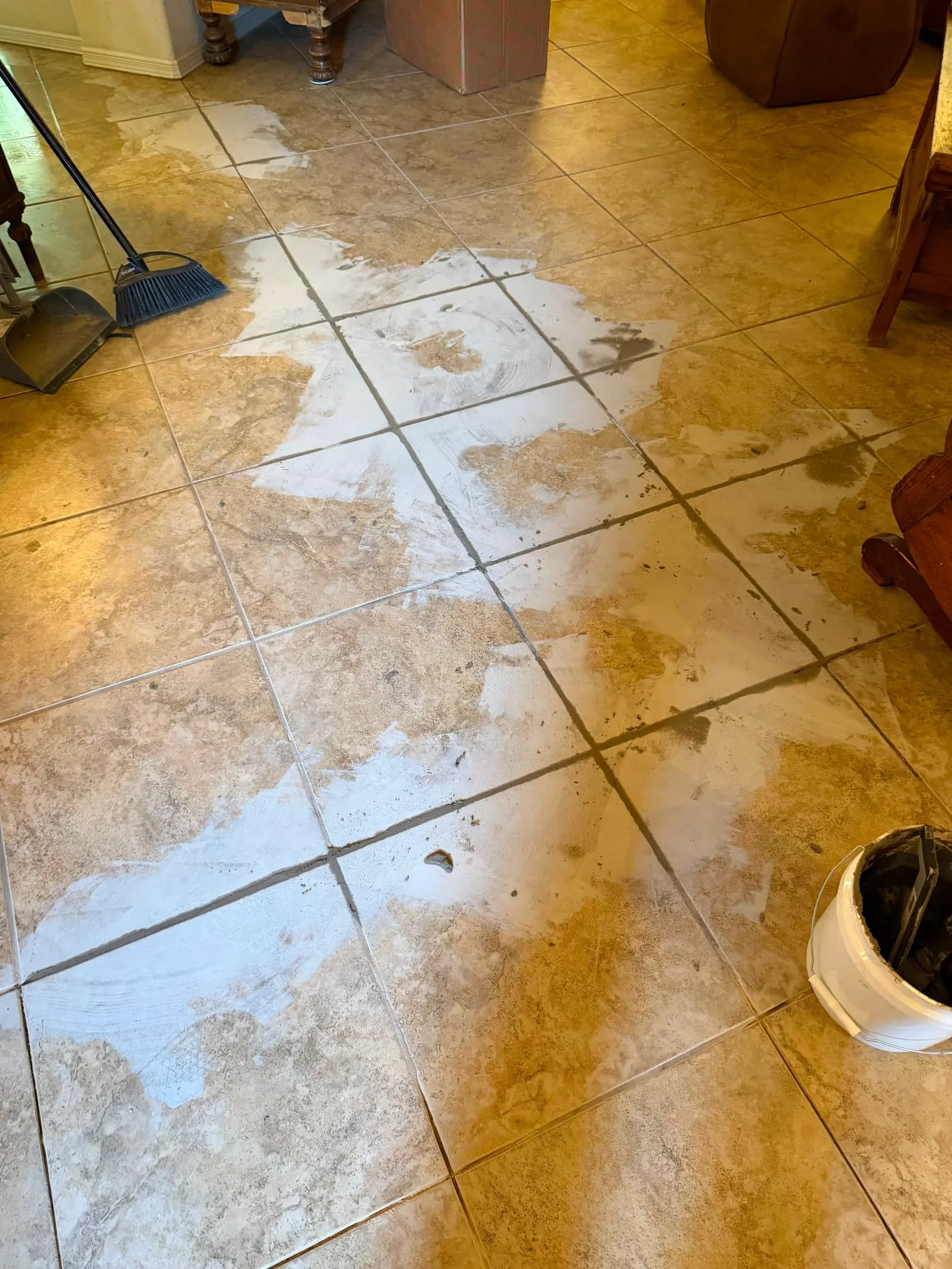
Regrouting means taking the failed grout out of the joints and packing fresh grout back in. It does not mean smearing a new layer over a joint that is still cracked. In this photo the fresh grout has been floated across the tile and pressed down into the open joints. The haze sitting on the tile face is normal at that stage and comes off as the work finishes. Packing a joint this way is what leaves full-depth grout behind instead of a thin skim that breaks apart again under traffic.
Regrouting in progress. Fresh grout floated into the joints before the haze is cleaned off the tile.
Full-depth joints
Failed grout comes out to a consistent depth before fresh grout goes in, so what is left behind is a real joint and not a layer sitting over a crack.
Cause before repair
Crack patterns, loose tile, and joints that should have been caulk get identified first, because a joint that is still moving will crack again.
Haze cleanup included
Grout haze on the tile face is part of the process. Cleaning it off is part of the job, not something left for the customer to deal with.
Who we serve
Tile and Grout Repair for homes and businesses
For Homes
Tile and grout repair for Las Cruces homeowners, renters, and landlords covers cracked joints, missing grout, loose tile, and caulk that has pulled away. Bathrooms and entryways usually show damage first, because those floors take water and foot traffic in the same spot every day.
Bathroom floors and shower walls with cracked or missing grout
Tub and shower pan edges where the caulk has pulled away
Kitchen joints near the sink and the dishwasher
Entryway tile cracked along the main walking path
Tile that rocks or sounds hollow in hallways and living areas
A single cracked tile that needs replacing without redoing the floor
Laundry and utility room joints around appliances
Rental and apartment tile repair before a move-out inspection
Grout color sealing to even out repaired joints
For Businesses
Commercial tile and grout repair for Las Cruces offices, restaurants, restrooms, and customer-facing floors fits here. Commercial joints fail in lanes rather than evenly, because carts, water, and cleaning schedules concentrate on the same strips of floor.
Restroom floor and base joints in offices and commercial buildings
Restaurant kitchen and service-line joints exposed to water and grease
Lobby and entryway tile where carts and daily traffic concentrate
Corridor grout cracked along the main route
Loose and rocking tile in customer-facing areas
Break room joints around sinks, dishwashers, and ice machines
Repairs across multiple rental units for property managers
Turnover tile repair between tenants
Why it happens
What the crack pattern tells you
The crack pattern tells you what failed. A line that runs straight across several tiles points to movement under the floor. A joint that crumbles in one wet corner points to water. A tile that rocks underfoot has lost its bond below, which is a different problem than the joint around it. Reading that pattern comes first, because it decides whether the answer is regrouting, grout replacement, re-caulking, or tile replacement.
Grout cracked in a straight line across several tiles
Crumbling or powdery grout that keeps coming loose
Open joints and missing grout in entryways and kitchens
Tile that rocks underfoot or sounds hollow when tapped
Cracked and chipped tile in the main walking path
Caulk pulling away at tubs, shower pans, and inside corners
Corner joints that crack again after every repair
Patched joints that no longer match the grout around them
What the pros know
Tile and Grout Repair field notes
Field Note
A crack that runs straight across several tiles, carrying on through joint after joint in one line, points to movement below the floor rather than to weak grout. Grout is rigid and breaks wherever the surface under it flexes. Regrouting that line without dealing with the movement usually brings the crack back in the same place. A single cracked joint that stops at the tiles on either side is a different situation, and usually a smaller repair.
Expert Insight
Any joint where two planes meet is built to move. Wall-to-floor lines, inside corners, and the rim of a tub or shower pan all fall into that group, and every one of them belongs in caulk instead of grout. Corners that crack again after every repair are usually grout sitting in a joint that was never meant to hold grout. Filling it with grout one more time repeats the failure, while a flexible joint absorbs the movement instead of breaking across it.
What We Check First
Tapping a tile floor finds what looking at it will not. The sound stays tight and solid where the tile is still holding to the mortar bed, and turns hollow and drummy where it has come away. Grout around a hollow tile is not the problem, so new grout does not solve it. The tile keeps moving and the fresh joint cracks again. Hollow tile gets found before any joint work is planned, because it changes what the repair actually is.
Moisture Note
An open joint stops the floor from shedding water. Mop water and spills that used to run across the tile now travel down the joint and reach the mortar bed and whatever sits under it. That is the reason an open joint in a kitchen, a bathroom, or an entryway is worth closing early. Water moving under tile can loosen the tile next to it, so one open joint tends to become a patch of loose tile if it sits long enough.
Surface Note
Grout color sealer is a coating, not a cleaner. It bonds to clean dry grout and changes the color of the joint from that point forward, which is how repaired joints, new grout, and original grout get brought to one color. Grout that is still damp or still holding soil gives the sealer nothing to bond to, so cleaning comes first. Color sealing also repairs nothing. A joint that is cracked or crumbling gets repaired before any color goes over it, or the color simply follows the crack.
Las Cruces Note
Two local conditions show up over and over in Las Cruces tile repair. The water carries a heavy mineral load, so scale builds along grout lines and hardens at wet edges such as tub rims, shower pans, and sink surrounds, which is where caulk tends to let go first. Slab-on-grade construction and a dry climate also mean floors expand and contract a little through the year as temperature and moisture swing. Both point the same direction: a rigid joint in a spot that needs to move will keep failing until the joint type changes.
What Most Homeowners Miss
New grout almost never matches aged grout, even when the bag says the same color. Grout already on the floor has taken on soil, been cleaned repeatedly, and shifted from its original shade, and dye lots vary between bags on top of that. A fresh joint beside a ten-year-old joint reads as a patch for that reason, not because the wrong color was picked. Where a repair needs to disappear into a larger floor, grout color sealing is the step that brings the whole floor to one color.
What Most Business Owners Miss
Commercial grout fails in lanes, not evenly. Door thresholds, cart paths, the turn coming out of a kitchen, the strip in front of a hand sink, and the corner where the mop bucket gets parked take far more stress than the floor a few feet away. Repairing the one cracked joint somebody noticed, while the rest of that lane sits in the same condition, usually means another repair on the same route later. Walking the whole lane shows which joints are next.
Process
Tile and Grout Repair process
Repair starts with the cause, not the crack. Grinding out old grout and packing in fresh grout is simple enough on its own, but new grout in a joint that is still moving breaks in the same place. Aggie checks for movement, loose tile, and joints that should have been caulk before any grout comes out.
1
Read the damage first. The crack pattern, the joint width, the tile type, and any loose or hollow tile decide what the repair needs to be.
2
Separate grout joints from movement joints. Inside corners, wall-to-floor lines, and tub and shower edges are built to move, so they call for caulk instead of grout.
3
Remove the failed grout to a consistent depth, working along the joint without chipping the tile edges.
4
Lift and reset or replace cracked and loose tile where needed. Replacement tile is matched as closely as the original tile, its age, dye lot, and current availability allow.
5
Float fresh grout across the tile and pack it into the joints to full depth, then strike the joints level.
6
Clean the grout haze off the tile face so the finished floor is not left cloudy.
7
Caulk the inside corners, wall-to-floor lines, and wet edges where a flexible joint belongs.
8
Discuss grout color sealing where the grout is sound, then walk the finished area and go over care guidance before it returns to normal use.
Service coverage
Tile and Grout Repair coverage and related terms
Grout repair and regrouting
These cover joints that have cracked, crumbled, washed out, or gone missing. Which method fits depends on why the joint failed, how wide it is, and how much of the floor is affected.
Tile and grout repairGrout repairRegroutingGrout replacementCracked grout repairCrumbling grout repairMissing grout repairGrout line repair
Caulk and movement joints
Inside corners, wall-to-floor lines, and tub and shower edges move, so they need a flexible joint. A caulk failure gets handled differently than a grout failure.
Damaged tile can usually be handled in place instead of redoing a floor. Whether a replacement can be matched depends on the original tile, its age, dye lot, and what is still available.
Color sealing changes the color of sound, clean, dry grout from that point forward. It is what brings repaired joints, new grout, and original grout to one color once the repair work is finished.
Grout color sealingGrout restorationGrout recoloringGrout color matchingGrout sealing after repair
Home, rental, and commercial tile repair
Scope, scheduling, and access differ between a home bathroom, a rental turnover, and a restroom floor that cannot close during business hours. Those details belong in the quote conversation.
Bathrooms, entryways, and kitchen paths crack first, where water and daily traffic land on the same joints.
Cracks follow cart paths, door thresholds, and service routes. Those lanes fail before the rest of the floor.
The crack pattern gets read first, because a line crossing several tiles means something different than one failed joint.
Loose and hollow tile
A tile that rocks underfoot has lost its grip on the mortar bed. Hallways and living areas show it first.
Loose tile in a lobby or corridor gets worse quickly under constant foot traffic and cart wheels.
Tile gets tapped for hollow spots before joint work is planned, because grout does not fix a bond problem.
Caulk at wet edges
Tub edges, shower pans, and inside corners pull away over time. Grout put in those joints cracks again.
Restroom bases, mop sink surrounds, and kitchen wall-to-floor joints take constant water and cleaning.
Joints built to move are re-caulked instead of grouted, so the joint flexes rather than breaking across.
Matching new work to old
Homeowners want the repair to disappear into the floor rather than read as a patch.
Businesses want repairs that do not draw the eye on a customer-facing floor, often across several areas at once.
New grout and replacement tile are matched as closely as the original material, its age, dye lot, and availability allow, and no exact match is promised.
Uneven grout color
Floors patched before, or cleaned many times, read as several grout colors in one room.
Traffic lanes on a commercial floor often sit a shade or two off the areas beside them.
Grout color sealing comes up once the joints are repaired, clean, and dry, so the floor reads as one color.
Rental and turnover work
Renters and landlords need cracked joints, missing grout, and loose tile handled before a move-out inspection.
Property managers may need several units on a schedule, with access arranged ahead of time.
Turnover repair is part of the service. Scope, unit count, damage, and timeline belong in the quote conversation.
Quote factors
What affects your tile and grout repair quote
A repair quote comes from the damage itself, not from the room it sits in. Two bathrooms the same size can turn into different jobs depending on how many joints failed, how wide those joints are, what the tile is, and whether any tile has come loose. Aggie can look at the issue before setting expectations.
Tile and grout repair sits close to a few other services. If the joints are solid and the problem is dark buildup rather than damage, tile and grout cleaning is the better starting point. If an open joint has let water reach the material under the tile, the water damage restoration page covers that side of it.
Aggie Carpet and Tile Cleaning provides tile and grout repair across Las Cruces, NM, and the nearby El Paso, TX area, with scheduling based in Las Cruces.
Recent Google reviews from Las Cruces homes and businesses Aggie has helped.
Google Review
Aggie Carpet Cleaning of Las Cruces came and cleaned our dirty carpet and dirty tile and grout, saving us lots of money. They were efficient and diligent. They are the BEST carpet and tile cleaners here in Las Cruces, New Mexico.
JHJennifer Hicks
Google Review
A wonderful young man came to clean my rug carpets and sofa. He did a fantastic job! Not only are they clean, they look brand new. He was easy to work with, right on time, and a really nice guy overall. Would definitely recommend.
SOSocorro Ontiveros
FAQ
Tile and Grout Repair FAQ
Common questions before scheduling.
What is the difference between tile and grout repair and tile and grout cleaning?
Cleaning removes soil from tile and joints that are still sound. Repair rebuilds what is damaged, which covers grout that has cracked, crumbled, or gone missing, tile that is loose or broken, and caulk that has pulled away. A quick test at home: if the grout is dark but solid, that is a cleaning job. If a fingernail catches in the joint, or the grout comes away as powder, that is a repair job. Some floors need both.
Does the whole floor need regrouting, or only the damaged area?
Often only the damaged area. Isolated cracked or missing joints can be repaired in place without touching the rest of the floor. Regrouting a larger section makes more sense when grout is crumbling in many spots at once, or when the same joint keeps failing along one line, because spot repairs on a moving joint tend to repeat. Aggie can look at how far the damage runs before setting expectations.
Will new grout match the existing grout?
Not exactly, and no repair should be sold on that promise. Grout already on the floor has absorbed soil, been cleaned many times, and drifted from its original shade, and dye lots differ between bags on top of that. The match depends on the original grout, its age, and its condition. Where the repair needs to blend into a larger floor, grout color sealing brings the repaired joints and the original joints to one color.
Can a cracked tile be replaced without redoing the whole floor?
Usually yes. A damaged tile can be cut out and replaced in place, with the joints around it regrouted so the repair sits flush with the floor. The limits are whether a matching tile can be found and how the floor was originally set. Whether a replacement matches depends on the original tile, its age, dye lot, and what is still available, so leftover tile from the original installation is worth looking for before anything else.
What causes grout to keep cracking in the same place?
Movement, in almost every case. Grout is rigid, so it breaks wherever the surface under it or beside it flexes. A crack that runs in one continuous line across several tiles usually means the floor is moving underneath. A corner or a wall-to-floor line that keeps failing is usually a joint that should be caulk, because those joints are built to move and grout cannot follow them. Until the cause changes, the same joint keeps breaking.
Why do inside corners and tub edges need caulk instead of grout?
Because those joints move and grout does not. Wherever two planes meet, such as an inside corner, a wall-to-floor line, or the rim of a tub or shower pan, the two surfaces shift slightly against each other. Caulk flexes with that movement. Grout cracks across it. A corner that has been regrouted more than once is usually a caulk joint that keeps getting filled with the wrong material.
What does it mean when a tile sounds hollow?
It usually means the tile has separated from the mortar bed under it. The tile can look perfect and the grout around it can look perfect while the bond below has already let go. New grout around a loose tile does not hold, because the tile keeps moving and breaks the fresh joint. That is why tile gets tapped during the review rather than judged by eye.
Should grout be sealed after a repair?
It can be worth doing on suitable grout once the repair is finished and the joints are clean and dry. Sealing is a protective step that may slow how fast soil soaks into the joint. It does not repair anything and does not replace a repair. Whether it makes sense depends on the grout type, the condition of the joints, and how hard the area gets used, so it comes up after the repair rather than being assumed for every floor.
What does grout color sealing and restoration do?
Grout color sealer coats clean dry grout and changes the color of the joint from that point on. It is used where repaired joints, new grout, and original grout read as different colors across one floor, and it brings them to a single consistent color. It bonds only to grout that is clean and dry, so cleaning comes first. It also repairs nothing, so a cracked or crumbling joint gets repaired before any color goes over it.
How is a tile and grout repair quote decided in Las Cruces?
By the damage, not by the room. The factors that move a quote are the condition of the joints, the size of the damaged area, the joint width, and the tile type. Beyond that it comes down to how many separate spots need work, whether any tile is loose or broken, whether a matching replacement tile can be found, and access to the area. Aggie can look at the issue before setting expectations, and clear photos of the joints are a good starting point.
Need tile and grout repair?
Tell Aggie Carpet and Tile Cleaning where the grout has cracked, crumbled, or gone missing, whether any tile feels loose or sounds hollow, and whether the spot stays wet. Photos of the joints help. Aggie can look at the damage before setting expectations for regrouting, grout replacement, re-caulking, tile replacement, or grout color sealing.
Tell Aggie Carpet and Tile Cleaning where the grout has cracked, crumbled, or gone missing, whether any tile feels loose or sounds hollow, and whether the spot stays wet. Photos of the joints help. Aggie can look at the damage before setting expectations for regrouting, grout replacement, re-caulking, tile replacement, or grout color sealing.
If anything about your cleaning is not right, call us and we will come back to make it right. In rare cases where we cannot fix the issue, you may be eligible for a partial or full refund.