
Cleaning guide
Can Carpet Be Saved After a Flood?
By Judaah Chandler5 min read
In this article
Can flooded carpet be saved?
Often the carpet can be saved and the pad cannot. Those are two different materials with two different answers. The carpet face is fiber attached to a backing, and when it is extracted quickly and dried thoroughly, it can often go back down and be cleaned. The pad is foam or fiber built to hold air, which means it also holds water and whatever the water carried in. The deciding factors are the water source, the hours it stayed wet, and whether the backing is still holding together. Aggie checks each one with moisture readings and a look under a lifted corner before anything is pulled, so the decision rests on what the carpet shows rather than a guess.
Why is the carpet pad usually the first thing to go?
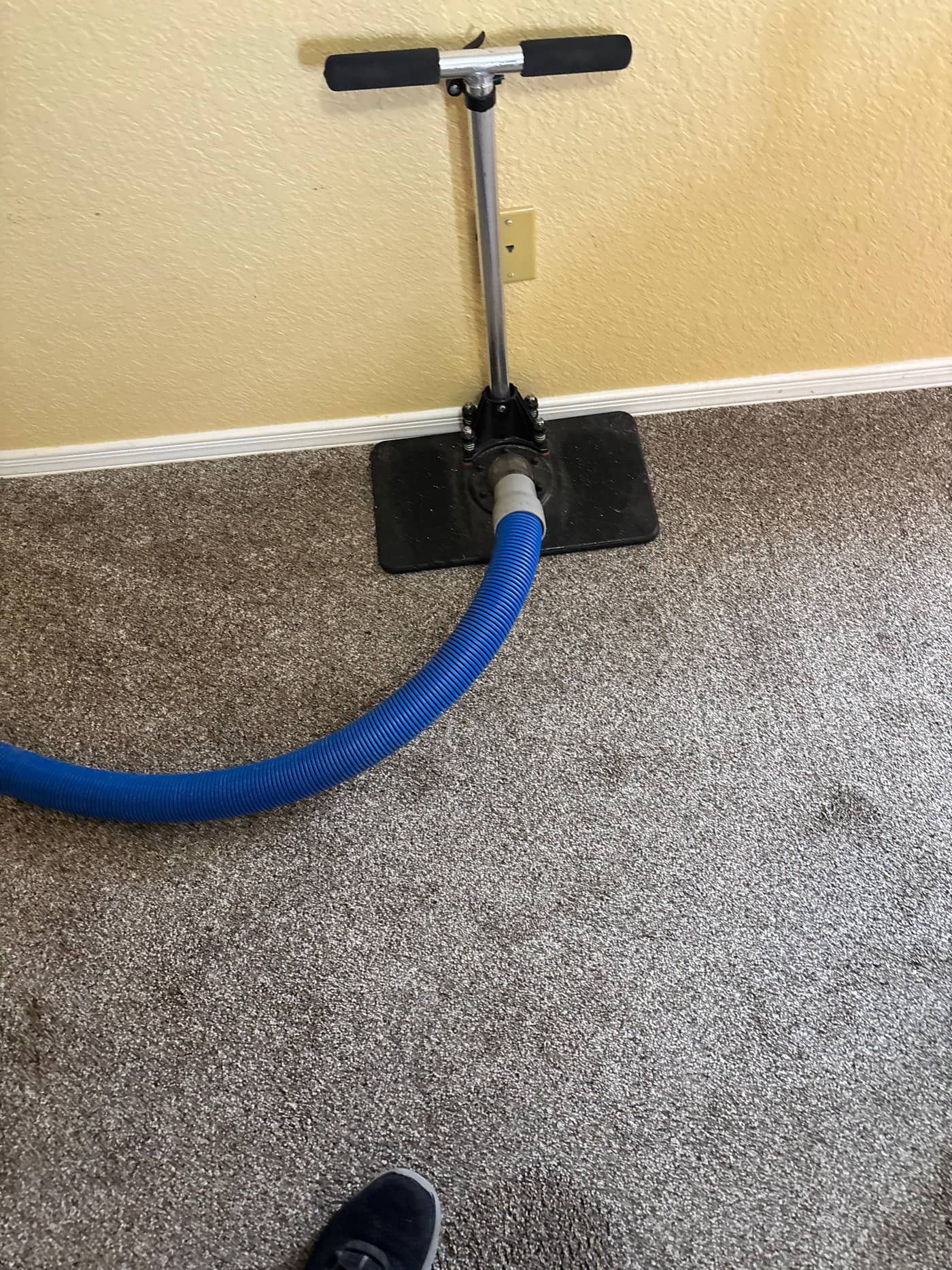
Carpet pad works like a sponge that cannot be rinsed. When water soaks the pad, it fills the foam, and extraction pulls out the water but not everything the water left inside. After storm runoff, silt and debris settle into the pad where no cleaning pass can reach them. Pad usually costs less than carpet, so replacing it is often the sensible trade. A Water Claw, the sub-surface extraction tool Aggie uses, presses into the carpet and pulls water up from the pad, which helps when a pad soaked by clean water is a candidate for drying in place. Pad soaked by runoff usually comes out regardless.
How does the water source change the answer?
The source sets the starting point. Water from a broken supply line or an overflowing sink starts clean, and carpet soaked by it has the best odds. Rain dripping through a roof or a backed-up canale picks up whatever it passes through on the way down. Runoff that rolls in under a door brings soil from the yard with it. The IICRC, which publishes the water damage restoration standard, sorts water into categories by contamination and said in a March 2026 position statement that storm water is not automatically placed in the most contaminated category. The same standard notes that time and temperature can change the category, so clean water that sits for days does not stay clean. Our guide to the categories of water damage explains each one in plain terms.
What signs mean the carpet cannot be saved?
Some carpet shows you it is finished. The backing separating from the carpet face, known as delamination, means the carpet will ripple and wear out even after it dries. Silt worked deep into the fiber after runoff can leave staining that cleaning does not lift. A musty smell that returns after the carpet feels dry usually points to moisture still trapped below. Carpet that sat wet for several days in a warm room is also a harder case. Aggie checks for these signs during the visit and explains them before recommending removal, because tearing out carpet that could have been saved costs you money for no reason.
How can you give flooded carpet the best chance?
Speed does more than anything else. Get standing water off the carpet as fast as possible, because water sitting on top keeps feeding the pad and backing below. Move furniture off the wet area, or set foil under the legs of pieces that cannot move, and pull area rugs off the carpet. Then call for emergency water extraction. Aggie Carpet and Tile Cleaning aims to arrive within 30 minutes of a call in Las Cruces, removes standing water with pumps and extraction equipment, takes out the pad and carpet that cannot be saved, and sets up air movers and dehumidifiers for what stays.
Related services
Related cleaning services
Whether flooded carpet stays or goes is decided on site. Aggie Carpet and Tile Cleaning provides emergency water extraction, water damage restoration, and carpet cleaning for Las Cruces homes and businesses.
Questions
Common questions about this topic
How long can carpet stay wet before it cannot be saved?
There is no single cutoff. Carpet extracted and dried within the first day has the best odds, and the odds drop the longer it stays wet, especially in a warm room. The water source matters as much as the hours. Under favorable conditions, mold can begin growing in wet carpet within about 24 to 48 hours.
Can I dry flooded carpet with fans?
Fans help dry the top of the carpet but do little for the pad underneath, which holds most of the water. Without extraction first, the pad can stay wet long after the surface feels dry. Fans work best after the water has been pulled out of the carpet and pad.
Does flooded carpet always need to be replaced?
No. Carpet soaked by a clean supply line and extracted quickly can often be dried and cleaned. Carpet soaked by storm runoff, carpet that has delaminated, or carpet left wet for days is more likely to need replacing. The pad is the part most often replaced.
What about carpet tiles and glue-down carpet in offices?
Commercial carpet behaves differently. Water spreads under neighboring carpet tiles before it shows on top, so more tiles are often wet than the stain suggests. Glue-down carpet can lose its bond when the adhesive stays wet. Aggie checks moisture past the visible edge in offices and stores before deciding what comes up.
Will cleaning remove the smell from flooded carpet?
Cleaning can remove odor from the carpet face, but a smell that comes back usually starts with moisture or residue in the pad below. That is one reason runoff-soaked pad is removed rather than dried in place. Results depend on the water source and how long the carpet stayed wet.
Keep reading
Related articles
More cleaning guides connected to this topic.
What to Do If Your Business Floods in Las Cruces
First steps for Las Cruces business owners and property managers after a storm floods an office, storefront, or rental unit, from safety to extraction.
Read the guideClean Water, Gray Water, or Flood Water: The Categories of Water Damage
The three categories of water damage in plain terms, why storm water is not automatically the worst category, and how the source changes the cleanup.
Read the guideDoes Homeowners Insurance Cover Flooding in New Mexico?
A plain-language guide to flood and water damage coverage in New Mexico, the 30-day flood insurance wait, and what to document after a Las Cruces flood.
Read the guide