Cleaning guide
How to Clean a Microfiber Couch in Las Cruces
By Judaah Chandler7 min read
In this article
Where do you find the cleaning code on a microfiber couch?
The cleaning code is usually printed on a small fabric tag, and finding it is the first thing to do before any cleaning. Check the tag under the seat cushions first, since that is the most common spot. If it is not there, look on the back of the couch, along the bottom of the frame near the legs, or under a removable cushion cover. The code is a single letter or short combination, listed as W, S, WS, or X, and it represents the manufacturer guidance for which cleaning agents are safe on that specific fabric. Some imported or older couches have no tag at all. When the code is missing, the safe assumption is to treat the fabric as the most sensitive type until a hidden test area proves otherwise, which is part of why a professional tests before cleaning.
What do the W, S, WS, and X cleaning codes mean?
Each code points to a different safe cleaning method, and using the wrong one is how damage happens. A W code means water-based cleaners are safe, so a water solution can be used for cleaning. An S code means solvent only, so water should be avoided and a dry solvent cleaner is required, because water can leave rings or cause shrinkage on that fabric. A WS code means both water-based and solvent cleaners are acceptable, which gives the most flexibility. An X code means no water and no solvent, vacuuming and light brushing only, because any liquid cleaner can damage the fabric. Many microfiber couches carry a W or S code, and the difference between them is significant. Reading the code wrong, and putting water on an S-coded fabric, is one of the most common ways a home cleaning attempt leaves permanent marks.
Why does microfiber show water rings and spots?
Microfiber shows water rings because of how the fabric and the soil in it react with moisture. Microfiber is made of fine synthetic threads packed tightly together, which makes the surface act like a sponge at the edges of any wet area. When water is applied and allowed to dry on its own, it spreads outward and carries fine soil with it toward the edge of the damp zone. As the water evaporates, that soil is left concentrated in a ring at the border, which is the water mark people notice. This is also why spot cleaning a small area can leave a halo that looks worse than the original mark. Cleaning the whole panel evenly, controlling moisture, and drying with airflow rather than letting it air-dry slowly are what prevent rings from forming.
What light upkeep is safe to do yourself between cleanings?
Light maintenance between professional cleanings is reasonable, as long as it matches the code. Vacuuming with an upholstery attachment is safe on any code and removes the surface dust and grit that wears fabric over time. A soft brush can lift the nap and keep microfiber from looking matted, and brushing in one direction keeps the texture even. For a fresh spill, blot gently with a clean dry cloth, pressing straight down rather than rubbing, which spreads the spill and pushes it deeper. On a W or WS fabric, a light touch of water on a hidden test spot first is the cautious approach. On an S or X fabric, skip water entirely and stick to dry methods. When a spot does not lift with safe home steps, stopping before over-wetting protects the fabric for a proper cleaning later.
How do you handle pet hair and odor on a microfiber couch?
Pet hair and odor are two of the most common reasons a microfiber couch needs attention. For hair, microfiber tends to grip it, so a vacuum alone often leaves some behind. A clean rubber glove, a damp sponge on a water-safe fabric, or a rubber pet-hair squeegee dragged across the surface lifts embedded hair more effectively than suction by itself. Odor is the harder problem. Smells from pets settle into the cushion foam and the fabric backing, not just the surface, so a surface wipe freshens briefly and the smell returns. That is the same source-level issue behind pet urine odor in carpet. A professional cleaning reaches more of the fabric and cushion than a surface pass, though deeply set odor in the foam can be difficult to fully remove. When a pet has an accident on the couch, treating it sooner gives a better result.
How does Aggie test and clean a microfiber couch in Las Cruces?
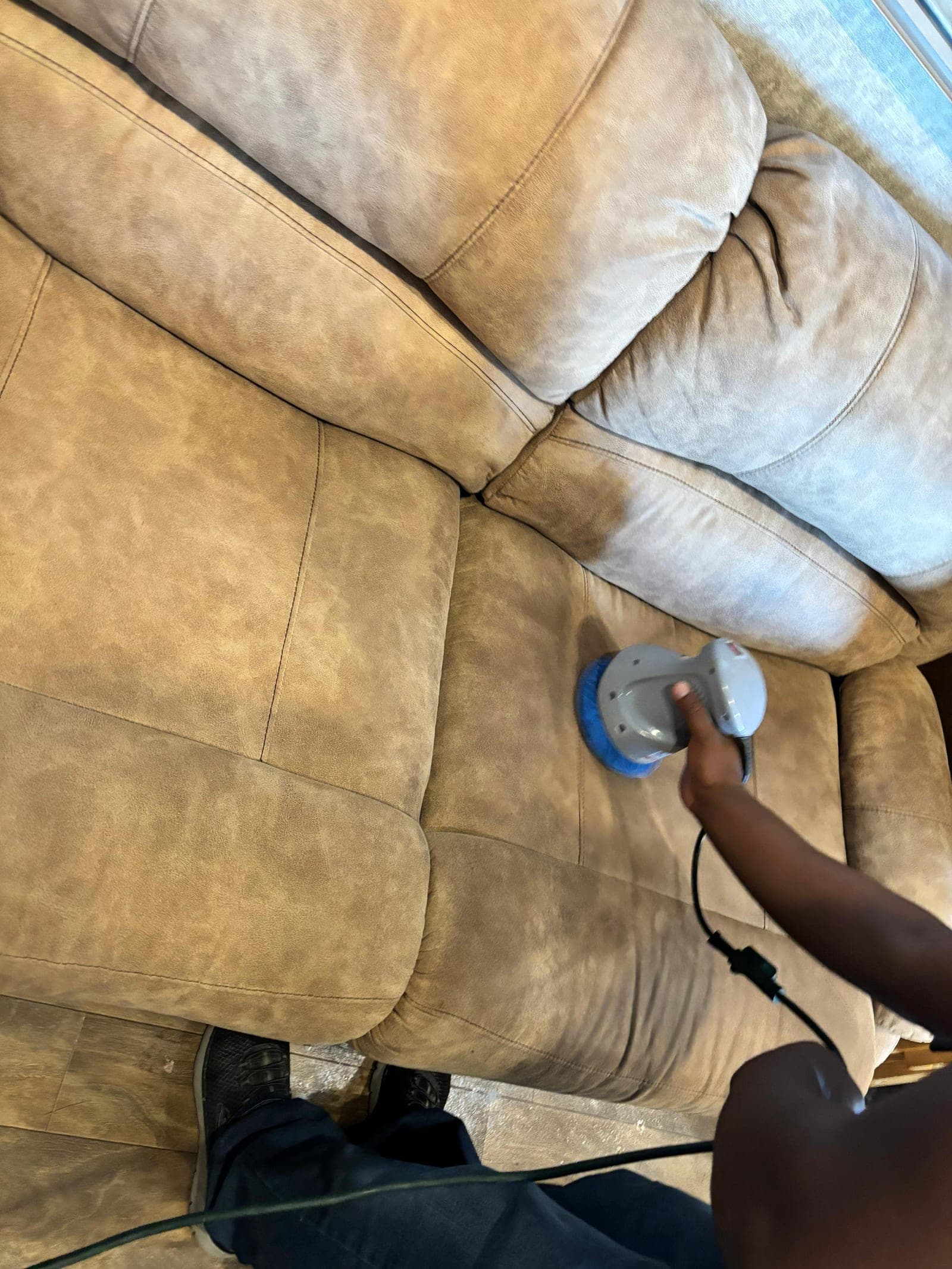
Aggie tests the fabric before cleaning rather than assuming the code on the tag is correct or even present. The first step is a small cleaning test in a hidden area, on the back or under a cushion, to confirm how the specific microfiber responds to the chosen method. From there, the cleaning is matched to the fabric: a water-based approach on a W or WS code, a solvent method on an S code, and dry methods on an X code or an unmarked fabric that fails a water test. The same fiber-aware caution applies to delicate materials in general, the way a hand-knotted rug needs its dyes tested first. Furniture cleaning in Las Cruces covers couches, sectionals, recliners, and microfiber pieces for homes and businesses, often booked alongside carpet cleaning for the same rooms.
Related services
Related cleaning services
Cleaning a microfiber couch safely comes down to reading the code and matching the method to the fabric. Aggie Carpet and Tile Cleaning provides furniture cleaning and carpet cleaning in Las Cruces for homes and businesses.
Questions
Common questions about this topic
Can you use water on a microfiber couch?
Only if the cleaning code allows it. A W or WS code means water-based cleaning is safe, while an S code means solvent only and water should be avoided, and an X code means no liquid at all. Putting water on an S or X fabric can leave permanent rings or cause the fabric to change texture. When the tag is missing, treat the couch as water-sensitive and test a hidden area first before using any water.
Why did my microfiber couch get water rings after I cleaned it?
Water rings form when a wet area is allowed to dry slowly on its own. The water spreads outward and carries fine soil to the edge of the damp zone, and as it evaporates the soil is left concentrated in a ring at the border. Cleaning a small spot rather than the whole panel makes this worse by leaving a visible halo. Cleaning the full section evenly, controlling how much moisture goes in, and drying with airflow are what prevent rings.
What does an S code on a couch mean?
An S code means the fabric should be cleaned with a solvent-based cleaner only, and water should not be used. The S stands for solvent. Water on an S-coded fabric can cause rings, shrinkage, or other damage, which is why the manufacturer specifies a dry solvent method. Many microfiber couches carry an S code, so checking the tag before any home cleaning attempt matters. A professional has the right solvent products and equipment for S-coded upholstery.
Can a microfiber couch be professionally cleaned if the tag is missing?
Yes. A missing tag does not prevent cleaning, but it does change the approach. Without a code to follow, the fabric is treated as sensitive until a small hidden test area shows how it responds to water and to solvent. That test guides which method is safe before any visible area is cleaned. Testing first is the standard careful approach for unmarked microfiber, and it is part of why a professional review is useful when the tag is gone.
How do you get pet smell out of a microfiber couch?
Surface wiping freshens a microfiber couch only briefly, because pet odor settles into the cushion foam and fabric backing rather than staying on the surface. Removing loose hair first with a rubber glove or squeegee helps, and a code-matched cleaning reaches more of the fabric than a wipe. Deeply set odor in the foam can be hard to fully remove, so honest expectations matter. When a pet has an accident on the couch, treating it sooner gives a better result than waiting.
Keep reading
Related articles
More cleaning guides connected to this topic.
How to Prepare Your Home for Carpet Cleaning
A short preparation checklist before a carpet cleaning appointment.
Read the guideHow Much Does Carpet Cleaning Cost in Las Cruces?
A straight look at what carpet cleaning costs in Las Cruces and what changes the price.
Read the guideCan Carpet Be Saved After a Flood?
When flooded carpet can be saved, when the pad has to go, and what Aggie checks before deciding in Las Cruces homes and businesses.
Read the guide