Cleaning guide
Water Mitigation vs Restoration: What Is the Difference?
By Judaah Chandler4 min read
In this article
What is water mitigation?
Water mitigation means limiting the damage while the water is still active. The goal is to stop the spread, not to make the room look finished. Mitigation covers stopping or slowing the source, pumping out standing water, extracting water from carpet and pad, and removing wet materials that will not dry in time, such as soaked pad or drywall that wicked water above the floor. It also covers setting up air movers and dehumidifiers so drying starts right away. Mitigation happens in the first hours, and it decides how much of the job afterward is drying and how much is replacing.
What does water damage restoration cover?
Water damage restoration is the longer work of getting the property back to a dry, clean state. It covers drying the structure and flooring over the following days, checking moisture readings until materials reach a dry standard, cleaning the affected surfaces, and dealing with odor. Aggie Carpet and Tile Cleaning provides water damage restoration in Las Cruces, including wet carpet and structural drying, flood cleanup, and a cleaning and sanitizing treatment for affected carpet and flooring. Rebuilding work such as new drywall, cabinets, or paint falls to a contractor, and active mold goes to a certified remediation specialist.
Where does emergency water extraction fit?
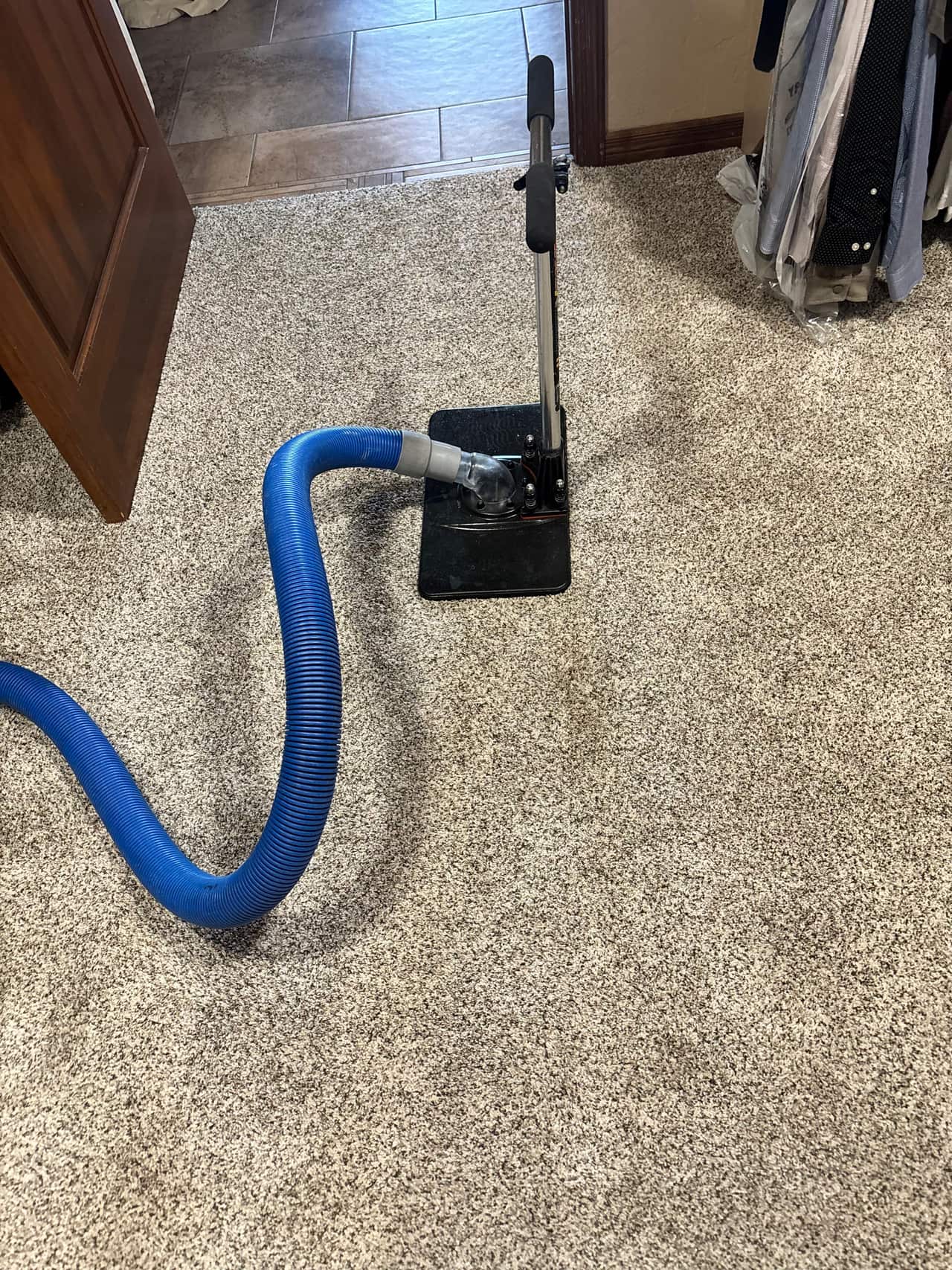
Emergency water extraction is the front end of mitigation. It has to happen fast, because water that stays in a building keeps spreading into pad, baseboards, and walls. When Aggie handles emergency water extraction, the crew uses submersible pumps for standing water, then truck-mounted extraction and a Water Claw to pull water from carpet and the pad underneath. Moisture meters show how far the water traveled, including drywall above the visible water line. Wet pad, carpet, and drywall that cannot be saved are removed and hauled away. Air movers and dehumidifiers then start the drying, which is where restoration takes over.
Why does the order of the work matter?
Drying a material that should have been removed wastes days. If soaked pad stays under carpet while fans run on top, the surface dries and the pad stays wet, which can bring back odor and stretch the job. Drywall works the same way: drying a wall that wicked runoff above the mud line can leave moisture inside it. Extraction and removal first, drying second, cleaning third. Following that order keeps the drying equipment working on materials that can be saved, and it keeps the timeline honest.
Who handles each part of the job in Las Cruces?
One company can cover most of a flood job. Aggie Carpet and Tile Cleaning handles both the mitigation and the restoration, including extraction, removal of wet materials, drying, and cleanup, for homes, rentals, offices, and storefronts. The phone is reachable 24 hours, and the crew aims to be on site within 30 minutes in Las Cruces. Two parts sit outside that work. Active mold is referred to a certified mold remediation specialist, because Aggie is not a certified mold remediation company. Rebuilding, such as hanging new drywall, goes to a general contractor once the structure is dry.
Related services
Related cleaning services
Mitigation and restoration usually happen back to back. Aggie Carpet and Tile Cleaning provides emergency water extraction and water damage restoration for Las Cruces homes and businesses, with the phone reachable 24 hours.
Questions
Common questions about this topic
Is water extraction the same as water mitigation?
Water extraction is the biggest part of water mitigation, but not all of it. Mitigation also includes stopping the source, removing materials that cannot be saved, and starting the drying. Extraction is the step that removes the water itself, from standing water on the floor to the water held in carpet pad.
Does mitigation come before restoration?
Yes. Mitigation comes first and stops the damage from spreading, usually in the first hours. Restoration follows and covers drying, moisture checks, and cleanup over the following days. Skipping straight to drying without extraction and removal often leaves wet material behind.
Is water mitigation covered by insurance?
Coverage depends on your policy and on what caused the water. A sudden pipe burst is often treated differently from a flood, and the New Mexico Office of Superintendent of Insurance states that flood damage is not covered by a standard homeowners policy. Check with your insurance provider. Aggie can help document the damage but does not file claims.
How long does water mitigation take?
The emergency part usually happens on the first visit, once the water source is under control. How long the drying takes afterward depends on how much water there was, what it soaked into, and the room conditions. Moisture readings decide when drying is finished, not a fixed number of days.
Does Aggie do mold remediation as part of restoration?
No. Aggie assesses mold concerns during a water job and explains what the situation shows, but Aggie is not a certified mold remediation company. Active or spreading mold is referred to a certified remediation specialist. Fast extraction and drying shorten the time materials stay wet.
Keep reading
Related articles
More cleaning guides connected to this topic.
Can Carpet Be Saved After a Flood?
When flooded carpet can be saved, when the pad has to go, and what Aggie checks before deciding in Las Cruces homes and businesses.
Read the guideClean Water, Gray Water, or Flood Water: The Categories of Water Damage
The three categories of water damage in plain terms, why storm water is not automatically the worst category, and how the source changes the cleanup.
Read the guideDoes Homeowners Insurance Cover Flooding in New Mexico?
A plain-language guide to flood and water damage coverage in New Mexico, the 30-day flood insurance wait, and what to document after a Las Cruces flood.
Read the guide